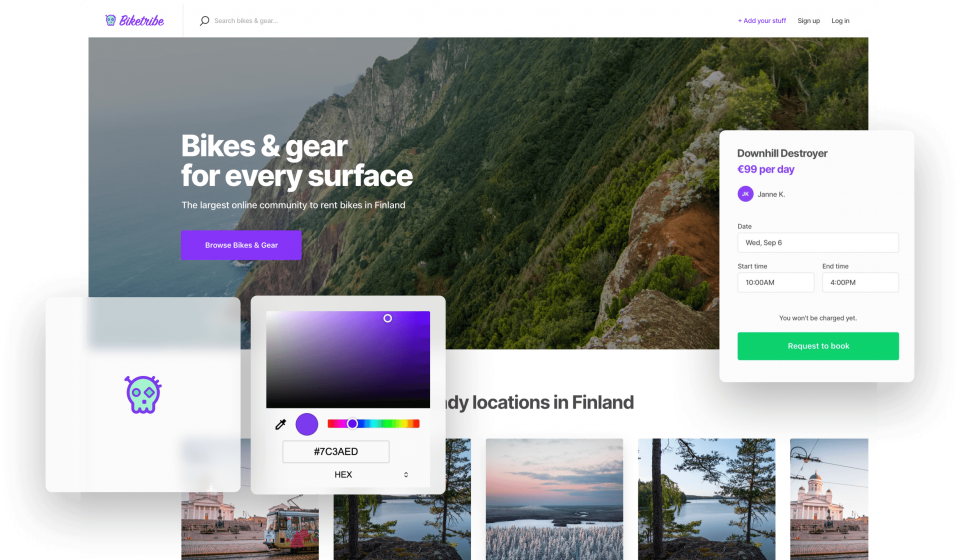

You know that feeling, right? That little spark, that “what if?” idea that just won’t leave you alone. For me, it was the concept of creating a specialized online marketplace – a place where people with a very particular need could connect with those offering exactly that solution. I’d been mulling it over for months, sketching out ideas on napkins, and constantly running into the same roadblock: how on earth do you actually *build* something like that without a team of developers and a bottomless budget?
I’m not a coder. Not even close. My technical skills extend to troubleshooting my Wi-Fi and maybe, just maybe, understanding what an API is in theory. So, the thought of building a robust, secure, and user-friendly platform from scratch was daunting, to say the least. I looked at various options, from trying to Frankenstein together a solution with WordPress plugins (which felt like building a house with LEGOs and duct tape) to hiring expensive agencies (which was completely out of my league financially).
That’s when I stumbled upon Sharetribe. The name itself sounded promising – “share” and “tribe” – hinting at a community-driven platform. Intrigued, I dove into their website, and what I found completely shifted my perspective on what was possible. If you’ve got a marketplace idea bubbling, trust me, you’ll want to keep reading. This isn’t just a review; it’s my journey, and hopefully, a helpful guide for yours.
Before we go further, if you’re already itching to see what I’m talking about, you can explore their offerings directly right here: Visit Official Website Now
What Exactly Is Sharetribe, Anyway?
At its core, Sharetribe is a platform designed specifically for building online marketplaces. Think Etsy, Airbnb, or even your local community skill-sharing site – but built by *you*. It’s not just an e-commerce store for one seller; it’s a dynamic space where multiple sellers can offer goods or services, and multiple buyers can find them. The genius of Sharetribe, for someone like me, is that it takes the colossal task of building such a complex system and breaks it down into manageable, user-friendly pieces.
They essentially offer two main products: Sharetribe Go and Sharetribe Flex. I’ll get into the differences, and why my choice matters, but the overarching promise is the same: providing the infrastructure for a multi-vendor, peer-to-peer marketplace.
My specific idea was fairly niche: a marketplace for connecting local artists offering custom commission work with buyers looking for unique, personalized pieces. I wanted a platform that handled payments securely, allowed artists to showcase their portfolios, and made it easy for buyers to communicate their vision. It felt like a tall order, but Sharetribe kept popping up in my research as a viable solution for non-technical founders.
My Personal Odyssey: Why I Needed a Marketplace Platform
The genesis of my marketplace idea, as I mentioned, stemmed from a personal frustration. I have a friend who’s an incredibly talented illustrator, but she struggled to find clients beyond her immediate network. At the same time, I’ve often wanted to commission custom artwork – a portrait of my dog, a unique gift, a personalized wall mural – but finding artists was a hit-or-miss affair of scouring Instagram or asking for recommendations. It felt like there was a huge gap, a fragmented market needing a central hub.
I envisioned a place where artists could create detailed profiles, list their commission types, set their prices, and manage their availability. On the flip side, buyers could browse by style, medium, or location, and securely initiate a project. The idea was simple, but the execution… that was the monster I feared. Building a custom platform would involve coding user authentication, secure messaging, payment gateways, listing management, review systems – it was enough to make my head spin. I knew I needed something off-the-shelf, but not just any e-commerce builder would do. It had to be purpose-built for a *marketplace* model.
This is precisely where Sharetribe entered my radar. They weren’t trying to be a generic website builder; they were focused solely on the marketplace ecosystem. This specialization was a massive green flag for me.
Sharetribe Go vs. Sharetribe Flex: Making the Big Choice
When you start looking into Sharetribe, you quickly learn about their two main flavors: Go and Flex. This was a critical decision point for me, and I spent a good amount of time weighing the pros and cons for my specific project.
Sharetribe Go: The "Get Started Now" Option
Sharetribe Go is their more out-of-the-box solution. It’s designed for speed and simplicity. You can literally get a fully functional marketplace up and running in a day or two, complete with user profiles, listings, payment processing (via Stripe), and messaging. It’s incredibly intuitive, and you don’t need any coding knowledge whatsoever. You pick a template, customize the colors, logo, and text, and you’re good to go.
For my initial idea, Go seemed perfect. I wanted to validate the concept quickly, see if there was real demand, and get some early users without investing a ton of time or money upfront. The thought of launching a real, live marketplace in days was incredibly appealing.
However, Go has its limitations. While it’s highly customizable in terms of branding and content, the core functionality and structure are fixed. You can’t add custom features, integrate with obscure third-party tools, or drastically alter the user flow. It’s fantastic for a general-purpose marketplace or a niche that fits its existing structure, but if you have very specific, unique requirements for your platform’s behavior, you might hit a wall.
Sharetribe Flex: The "Build Anything" Powerhouse
Sharetribe Flex is a different beast entirely. This is where the magic happens if you have ambitious, unique marketplace ideas that require deep customization. Flex provides the headless backend, meaning it gives you all the core marketplace functionalities (user management, listings, transactions, messaging, etc.) as an API. You then use this API to build your *own* custom frontend (the part users see) using whatever web technologies you prefer.
This means Flex offers virtually unlimited customization. You can design the user interface exactly as you envision it, implement unique workflows, integrate with specialized services, and truly differentiate your marketplace. The catch? You need developers. Or, like me, you need to be willing to learn a fair bit or hire someone who knows their way around APIs and frontend development. It’s not a no-code solution like Go.
For my artist commission marketplace, as I dug deeper, I realized I *did* have some unique needs – specific fields for artists’ portfolios, advanced filtering for buyers, a custom way to manage project milestones. While Go would get me started, Flex would allow me to build the *exact* experience I envisioned. It was a bigger leap, but it felt like the right one for long-term scalability and differentiation.
So, I opted for Flex. It meant a steeper learning curve and a bit more initial investment (mostly in my own time learning or potentially hiring help), but the freedom it offered was unparalleled. I spent a good few weeks watching tutorials, playing with their developer documentation, and building a basic prototype. It felt like I was learning a new language, but one that promised to bring my dream to life.
Getting Started: The User Experience (from My Flex Journey)
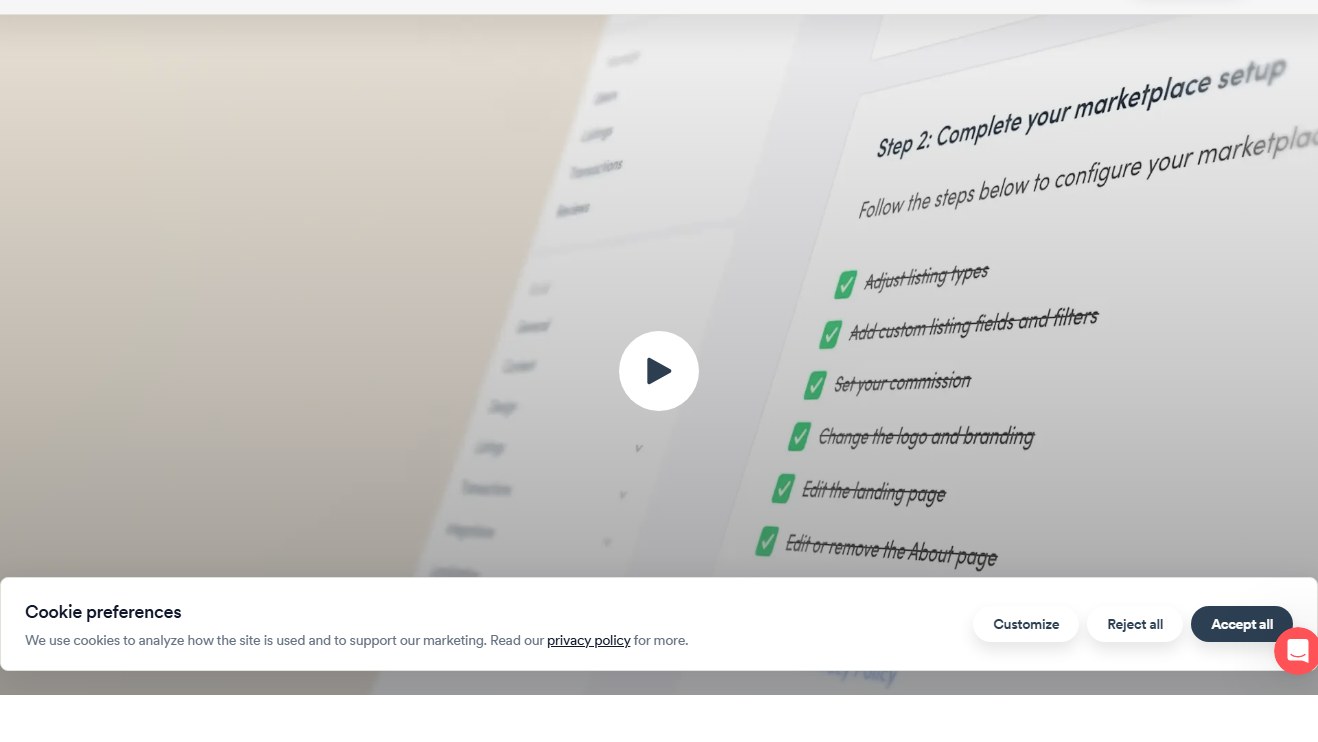
Even though I chose Flex, Sharetribe’s approach to getting started is surprisingly well-documented and supported. For Go users, it’s even simpler. My initial setup with Flex involved:
- Creating an Account: Simple sign-up process.
- Setting up the Development Environment: This is where Flex deviates from Go. I had to learn about command-line tools, Git, and how to connect my local development environment to Sharetribe’s API. They provide excellent starter kits and documentation, which was a lifesaver.
- Understanding the API: This was the biggest learning curve. Sharetribe’s API is robust and well-structured, but understanding how to query for listings, create users, and initiate transactions took some focused effort. Their support team and community forums were invaluable here.
- Building the Frontend: This is where the creativity really came in. I started with one of their React-based starter templates and began customizing. Changing layouts, adding new pages, integrating my branding – it was a true building process.
- Integrating Payments: Sharetribe integrates seamlessly with Stripe, which is fantastic for handling complex marketplace payment flows (like taking a commission, paying sellers, managing refunds). This part was relatively straightforward thanks to their clear guidelines.
It sounds like a lot, and it was, but the key is that Sharetribe handled all the really complex, backend stuff – the database, the server infrastructure, the security, the payment logic. I was just connecting the dots and designing the user-facing experience.
Key Features I Absolutely Love (and rely on daily!)
- Robust API (Flex): This is the backbone of everything. It allows me to build exactly what I need without compromising.
- Payment Processing (Stripe Connect): Handling payments in a multi-vendor setup is notoriously complex. Sharetribe’s integration with Stripe Connect makes it remarkably easy and secure, managing escrow, commissions, and payouts.
- User Management: Keeping track of buyers and sellers, their profiles, and their interactions is crucial. Sharetribe’s system is clean and efficient.
- Listing Management: Sellers can easily create and manage their offerings, including images, descriptions, pricing, and availability.
- Communication Tools: The built-in messaging system is essential for buyers and sellers to connect and discuss projects.
- Scalability: Knowing that as my marketplace grows, Sharetribe can handle the increased load without me worrying about server crashes or performance issues is a huge relief.
If you’re curious about diving deeper into the technicalities or simply want to see the options available, I highly recommend checking out their full suite of services. You can start your own exploration right here: Visit Official Website Now
The Good, The Great, and The "Could Be Better"
No tool is perfect, and Sharetribe is no exception. However, my overall experience has been overwhelmingly positive. Let’s break it down.
The Pros (Why I’m a Fan):
- Speed to Market (especially with Go): If you just want to test an idea, Go lets you launch in days. Even with Flex, having the backend handled dramatically cuts down development time compared to starting from scratch.
- Focus on Marketplaces: This isn’t a general e-commerce platform trying to *also* do marketplaces. This is purpose-built, and it shows in the features and structure.
- Scalability: As my platform grows, I don’t have to worry about the underlying infrastructure. Sharetribe handles the heavy lifting, allowing me to focus on users and strategy.
- Excellent Documentation & Support: For a non-coder diving into Flex, their documentation was a lifeline. When I did hit a snag, their support team was responsive and helpful. The community forum is also a great resource.
- Security & Payments: Trust is paramount in a marketplace. Sharetribe’s integration with Stripe and their focus on secure transactions instills confidence in both buyers and sellers.
- Flexibility (with Flex): This is obviously the biggest pro for my specific use case. The ability to craft a truly unique user experience is invaluable.
Things to Consider (The "Could Be Better"):
- Learning Curve for Flex: While powerful, Flex is not for the faint of heart if you have zero development experience. Be prepared to learn or hire. This isn’t a “con” in terms of the product itself, but a consideration for users.
- Pricing Structure: Sharetribe’s pricing (especially Flex) can scale up as your marketplace grows. While this is standard for SaaS, it’s something to factor into your business model. For early-stage startups, it can feel like a significant monthly overhead, although still far less than custom development.
- Go’s Customization Limits: If you start with Go and realize you need highly specific features, migrating to Flex isn’t a trivial task. It’s better to assess your long-term needs early on.
- No Built-in Mobile Apps: While you can build a responsive web app with Flex, Sharetribe doesn’t directly provide native iOS/Android app builders. You’d need to develop those separately, integrating with the same Flex API.
Real People, Real Talk: What Other Users Are Saying
While my experience has been largely positive, I always look to see what others in the Sharetribe community are saying. It helps to get a broader perspective. Here are a few sentiments I’ve come across that resonate with my own observations, or highlight different aspects:
“We launched our local service marketplace with Sharetribe Go in less than a week. We had a super tight budget and no dev skills, so it was a dream come true. It’s not custom, but it got us off the ground faster than we ever thought possible.” – Sarah K., Founder of "Local Connect"
“Moving to Flex was a game-changer for us. Our niche market had very specific needs for product listings and booking flows. The API gave our developers the power to build exactly what we wanted, making our platform truly stand out.” – Mark T., CTO at "GearShare"
“The documentation for Flex is incredibly comprehensive, which was a huge help for our small dev team. Whenever we got stuck, the community forum or a quick message to support usually got us sorted. They really do empower you to build.” – Emily R., Lead Developer at "Artisan Finds"
“The pricing can feel a bit steep as you scale, but when you compare it to the cost of maintaining your own servers, payment gateways, and security infrastructure, it’s actually a steal. It lets us focus on our business, not IT.” – David C., CEO of "SkillBridge"
These quotes pretty much sum up the spectrum: the ease of Go for quick launches, the power of Flex for deep customization, the value of their support, and the practical considerations around pricing versus value.
Who is Sharetribe For? My Take.
Based on my dive into the platform and discussions with other users, I’d say Sharetribe is an excellent fit for:
- Aspiring Entrepreneurs: If you have a brilliant marketplace idea but lack technical skills or a huge budget, Sharetribe Go is an ideal starting point to validate your concept quickly.
- Niche Market Builders: Got a very specific community or service you want to connect? Sharetribe’s flexibility (especially Flex) allows you to tailor the experience to that niche.
- Startups with Development Resources: If you have developers (or are one yourself) and need a robust, scalable backend for a highly customized marketplace without building everything from scratch, Flex is a powerhouse.
- Businesses Expanding into Marketplaces: Existing businesses looking to add a multi-vendor component to their offerings can leverage Sharetribe’s infrastructure.
It might be less ideal for someone looking for a simple single-vendor e-commerce store (Shopify or similar would be better) or someone who absolutely needs native mobile apps on day one without any development work (though Flex can support building them).
My Final Thoughts and Recommendation
Venturing into the world of online marketplaces felt like staring up at Mount Everest. Sharetribe, for me, was like finding a fully equipped base camp with experienced Sherpas ready to guide me. It didn’t make the climb effortless – especially with Flex, there’s still plenty of work to do – but it provided the essential tools, infrastructure, and support to even make the ascent possible.
My custom artist commission marketplace is now live, and it’s evolving every day thanks to the foundation Sharetribe Flex provided. I’m able to add new features, refine workflows, and respond to user feedback in ways that would have been impossible if I’d attempted to build this from the ground up without their framework.
If you’re sitting on a marketplace idea, feeling overwhelmed by the technical hurdles, I genuinely believe Sharetribe is worth a serious look. Whether you opt for the rapid deployment of Go or the unparalleled customization of Flex, they offer a pathway to turn your vision into a reality. It’s a powerful tool that empowers creators and entrepreneurs, and that’s something I can wholeheartedly stand behind.
Ready to start building your own marketplace? Don’t let technical fears hold you back any longer. Explore what Sharetribe can do for you:
Beyond the Launch: What’s Next for My Marketplace
Launching is just the beginning, as any entrepreneur knows. With Sharetribe handling the backend complexities, I can now dedicate my time to growing my artist community, attracting more buyers, and continuously improving the user experience based on real feedback. The freedom to iterate and innovate without constant server maintenance or debugging database issues is truly liberating. It’s an exciting time, and I’m glad Sharetribe is the platform I chose for this adventure.